AI-native workflows, automated production, custom tools.
AI-native workflows, automated production and custom tools. I decide where the machine takes the repeatable work, where a person decides, and what happens at the point between them.

What I automate
Content production pipeline
For teams that need regular articles they can trust without an editor rewriting every draft. A writing and verification pipeline with three gates: facts checked against primary sources, then style and language, then format. The editor sees a draft only after all three pass. Runs weekly for an independent bilingual media outlet.
Claude · custom agents · automated checks
Newsletter production
For teams that need a weekly newsletter but have no one to spend a day collecting news. Sources are monitored automatically, and the week's items are selected, fact-checked and laid out in the newsletter template, ready for the editor to send. Two issues a week in English and Russian for an independent media outlet, drawn from about 1,900 source items a week.
RSS · Telegram channels · beehiiv · WordPress API
Publishing integrations
For teams that lose time moving content between tools. Custom Telegram bots take a link to a document and turn it into a formatted article draft on the site. Approved posts go out on schedule to Instagram, Facebook, LinkedIn and YouTube Shorts.
Telegram Bot API · Google Apps Script · WordPress REST API · Meta (Instagram, Facebook) · Postiz · Buffer
Dashboards and flags
For teams that want to see where things stand without opening five services. Dashboards built on your own data: traffic, search, newsletter opens, content-plan status. Flags go up when something needs a person, such as a deadline in the next two weeks or an overdue follow-up.
Google Analytics 4 · Search Console · beehiiv · custom web dashboards
Migrations and bulk changes
For teams moving to a new platform that can't afford to lose the archive. Content moves with automated checks that nothing was lost. For Arts of the Working Class: 1,100 articles and 3,000 files.
Ghost Admin API · migration scripts · automated validation
Anything else in marketing
For teams with a routine that isn't on this list. If a marketing task repeats every week, such as reports, content formats, lists or handovers between tools, it can usually be automated. Tell me what takes up your week, and I'll show you which part a machine can do.
Your current stack · APIs · webhooks · custom scripts
Selected AI projects
Nine projects where AI or automation carried the production. Open any card for the problem, the system, my role and the result.
Project type
Practice
 Platform · EditorialThe Difference Machine
The Difference Machine
An AI publishing workflow where machines do the repetitive work and a person signs off before anything goes out.
The Pipeline reached approximately 10% weekly subscriber growth with a 90% open rate.
How it was built
- A small company had to publish continuously — articles, a newsletter, social channels, a site — while every decision that carried the founders' voice still had to be made by a person.
- A hybrid production line built around approval gates. Research feeds topic discovery; a person approves the direction; the machine produces; a person checks before publication. Around that: company calls turned into task lists in Notion, a team assistant, and the pipelines behind the site and the newsletter.
- Chief Marketing Officer. I wrote the rules the system runs on and I run it. Company content is reviewed by me; anything in a founder's personal voice stays separately human-written.
- The Pipeline reached approximately 10% weekly subscriber growth with a 90% open rate.
Claude Code · custom agents · Notion API · call transcripts · newsletter and site automation
The Pipeline — newsletter cover 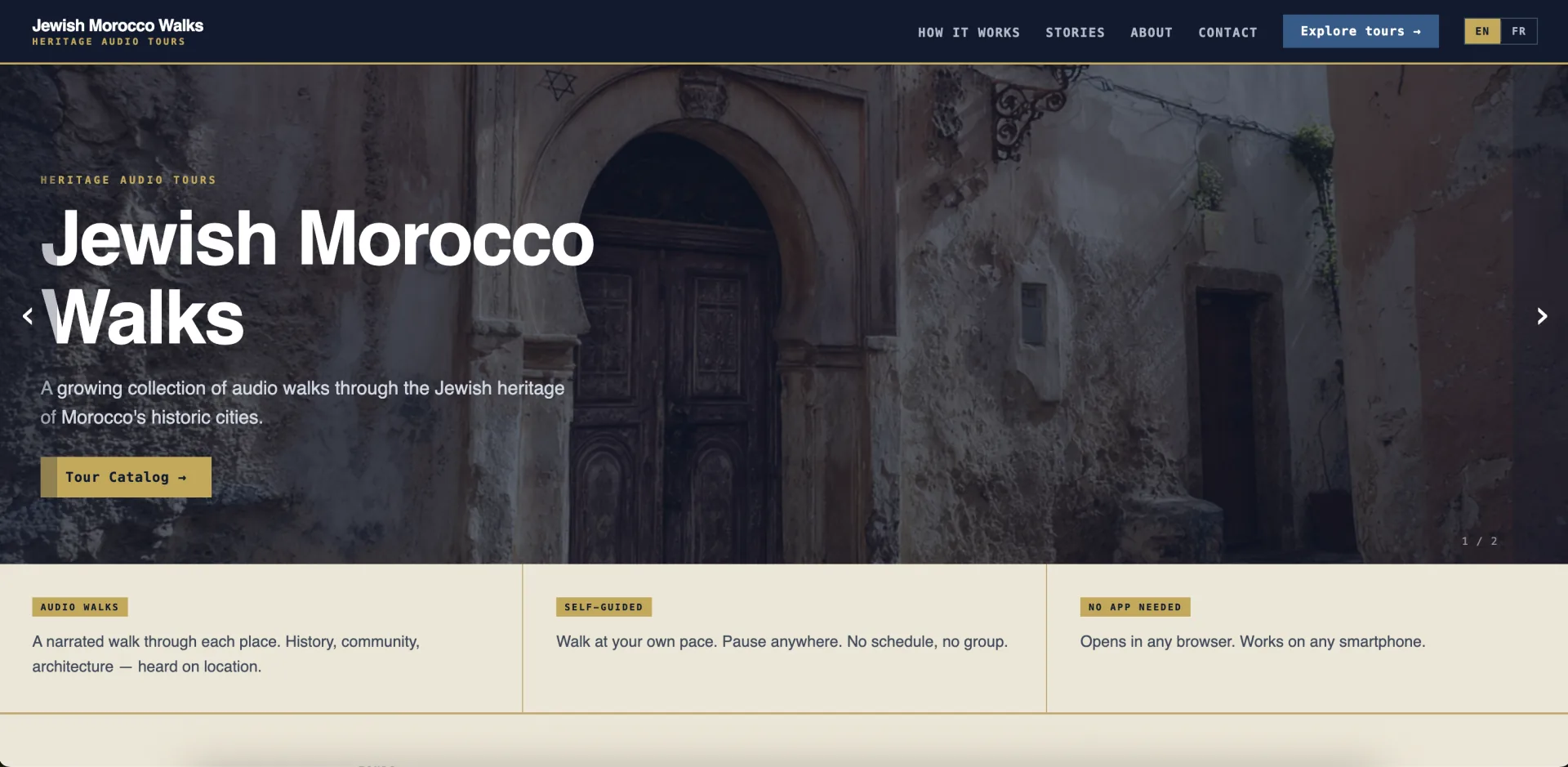 Launch · PlatformJewish Morocco Walks
Jewish Morocco Walks
An independent documentary audio walk through Jewish Essaouira that opens in a browser — no app, no install.
Live: 11 stops in English, French and Polish.
How it was built
- An independent documentary product with no team behind it still had to publish social content continuously, in three languages, at the pace of an organisation.
- A full-cycle AI-assisted social-content production line running on the same editorial base as the walk itself: research and scripting, visual development, image and video generation, editing, localisation and publishing, as one pipeline.
- Creator and producer. I built the pipeline and I run it.
- The live walk contains 11 stops in English, French and Polish, with social production kept up by one person.
AI research and scripting · generative image and video · localisation · scheduled publishing
Main project visual 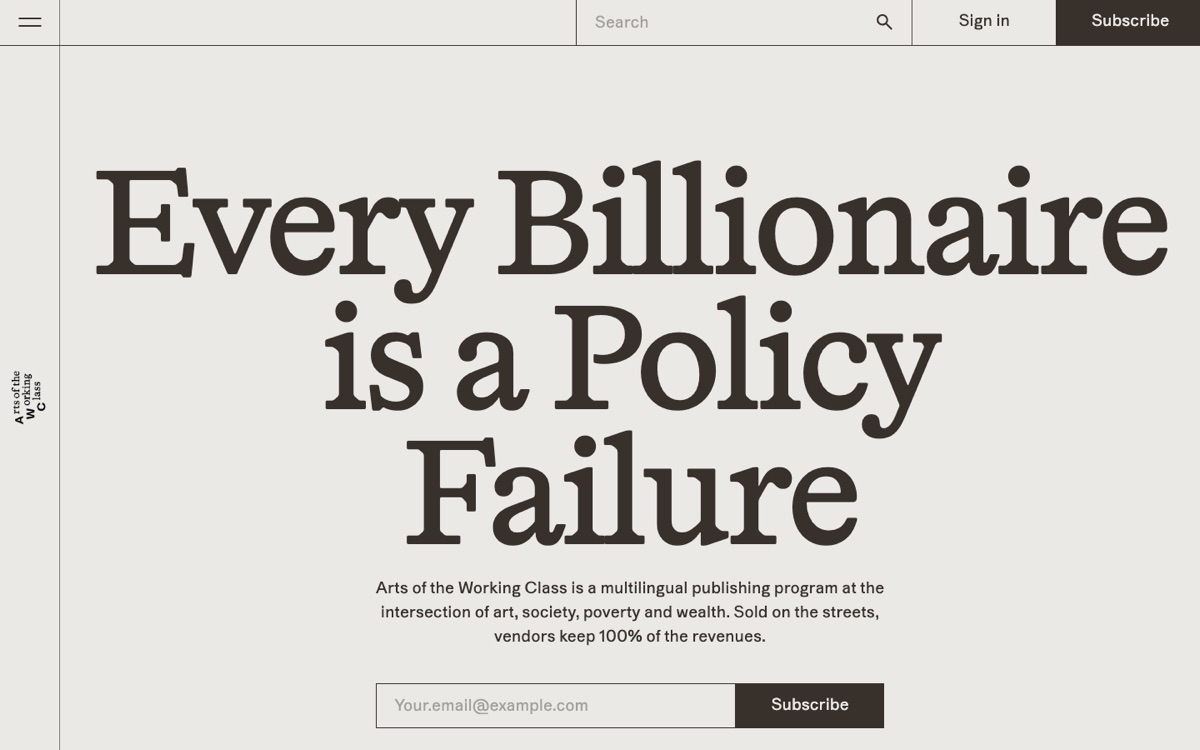 Migration · PlatformArts of the Working Class
Arts of the Working Class
Six years of an international art newspaper moved to a new site — 1,100 articles and 3,000 media files, recatalogued by year and issue.
Author profiles came out unified, and every status, address and link between texts, sections and issues survived the move.
How it was built
- Six years of an international art newspaper had to leave a platform that was being retired: over 1,100 publications and more than 3,000 media files, held together as a flat archive rather than as structured data.
- A migration pipeline. Content was extracted, transformed and validated in bulk, then written into the new CMS through its API, and the flat archive was restructured into a catalogue by year and issue. Authorship, publication states and addresses came across as data; what the API refused went a separate route.
- Technology Producer & Developer. I planned the migration, built the catalogue and moved the archive.
- The full archive is live on the new platform as a catalogue by year and issue, with authorship and publication states intact.
Ghost Admin API · custom migration scripts · bulk transformation · automated validation
No case page yet
Arts of the Working Class — the archive before and after the move 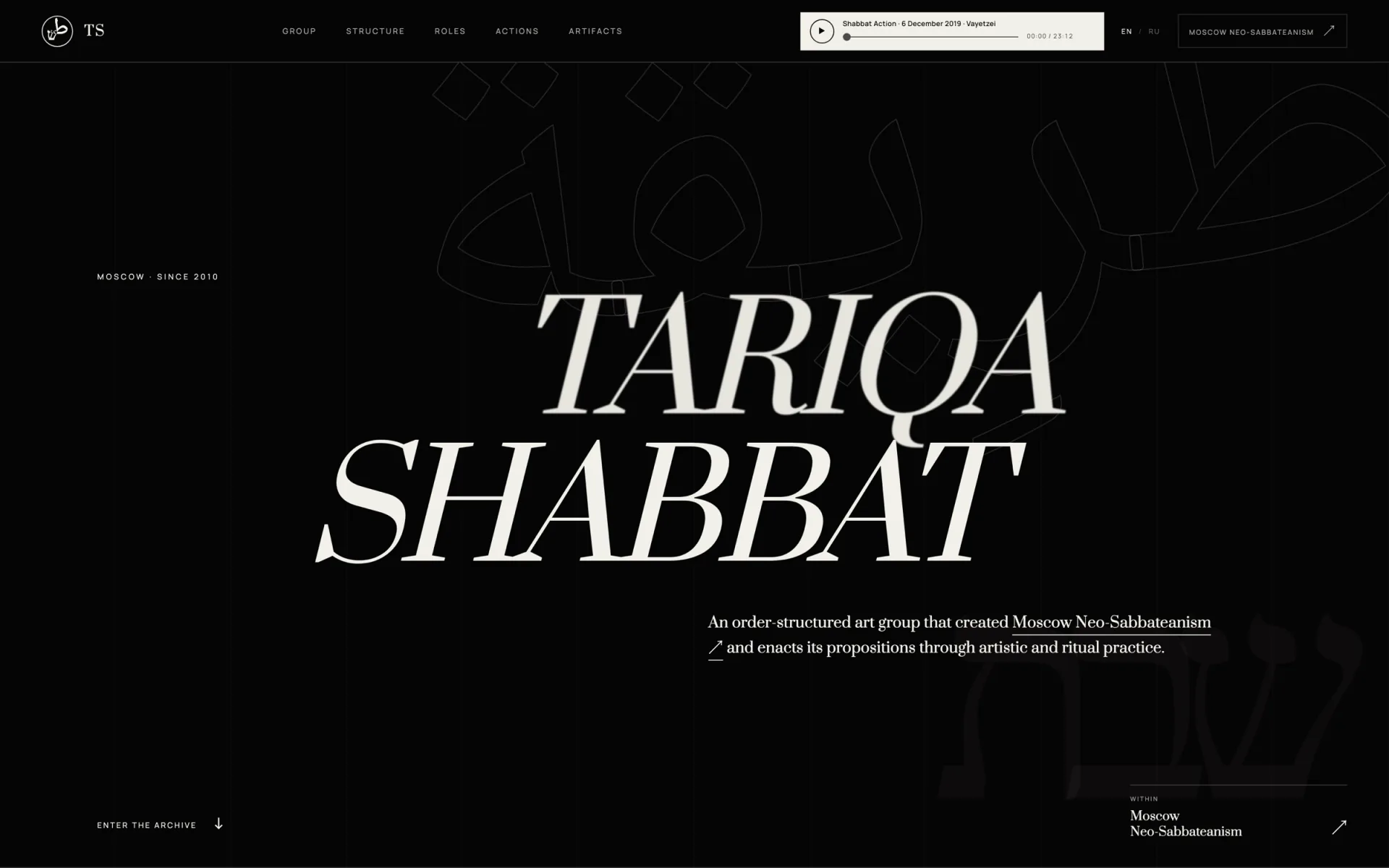 Platform · EditorialTariqa Shabbat
Tariqa Shabbat
A Moscow art group, founded 2010, published for the first time as a bilingual archive: actions since 2011, and the archive the group lost.
One page holds all of it — seven sections, the action catalogue, liturgical documents, audio. The archive lost after an elder's death is published as an ongoing action, not a gap.
How it was built
- An art group working since 2010 held fifteen years of actions, liturgical documents and audio with no published form — and its own archive had already been partly lost.
- The archive was written as a website: a bilingual structure in which actions, documents and the group's lost archive are catalogued as parts of the work. Concept, editorial architecture and the build were done AI-assisted end to end — structure, copy, markup and publication as one pass.
- Concept, editorial architecture and development. The whole site is mine.
- Published as a bilingual archive at tariqashabbat.boats.
AI-assisted build · bilingual content architecture · static publication
Tariqa Shabbat — the site's opening screen  Production · CampaignEmigration to the Future
Emigration to the Future
A three-day festival of 40+ events, made by its participants with no money and no institution behind it.
40+ events by 40+ artists from seven countries across three days, free entry, no institutional funding.
How it was built
- An independent three-day festival with no institutional funding had to run its content and announcements at the pace of a much larger organisation.
- Content management and announcement pipelines: programme material processed into channel formats and published across four channels, with artist and event announcements produced and scheduled through an AI-assisted workflow and approval kept human at the point of publication.
- Project Coordinator and Producer — catalogue and communications.
- The festival ran in Berlin on 7–9 August 2026, with its content and announcements produced this way and published across four channels.
AI-assisted content production · announcement pipeline · scheduling
No case page yet
Festival cover  Launch · PlatformClariozo
Clariozo
Turned a growth methodology into an AI coaching product people talk to instead of studying.
Paid tests converted at 15% to registration and 5% end to end. The English-language funnel reached 105 users, with 25.7% completing a full response.
How it was built
- A growth methodology existed as a course library and had to work as a conversation instead — guided, repeatable and useful without a coach in the room.
- Dialogue architecture: guided questions, prompt logic, follow-ups and generated product artefacts, wired to a customer journey — beta landing, onboarding, lifecycle and re-engagement email, analytics and acquisition tests.
- Project Manager & Marketing Lead. Dialogue architecture and prompt development on the product side, the landing, onboarding, lifecycle email and acquisition tests on the other.
- The methodology shipped as a guided AI coaching product with a repeatable customer journey.
Conversational design · prompt development · lifecycle email · analytics
Product visual  Launch · EditorialWorld Cannabis Tour
World Cannabis Tour
Independent cultural product in development
The Prague route works end to end: research, script, narrator, web product and a walk you can actually take.
How it was built
- A documentary audio format about cannabis history, policy and civic institutions had to be produced end to end by one person, without a production company behind it.
- Built AI-native from the start: research, route architecture, scripting, narrator voice, audio production and the web product itself run through AI-assisted workflows, with editorial review standing between each stage and the next.
- Creator and producer, end to end — editorial concept, research, route architecture, scripting, product logic, technical implementation and delivery.
- A retained six-stop Prague route is built and runs in a browser with audio.
AI-assisted research and scripting · audio production · browser-based delivery
World Cannabis Tours — YouTube trailer 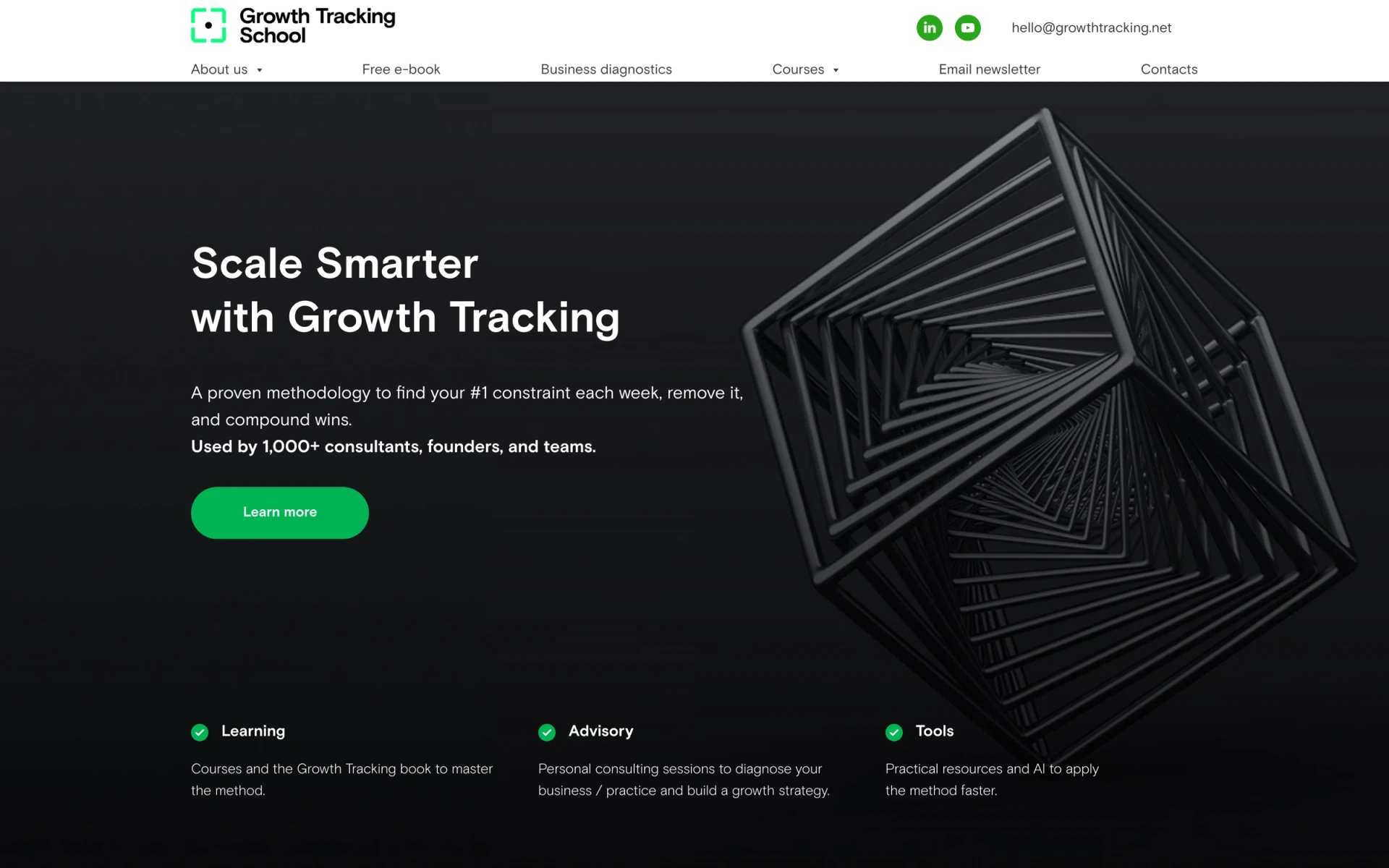 Launch · EditorialGrowth Tracking School
Growth Tracking School
Produced the US-market localisation of a growth methodology — courses, tools, lead magnets and launch.
It came out as an English-language product line rather than a translation: courses, tools, lead magnets and launch communications from one methodology.
How it was built
- A Russian-language methodology had to become an English-language product system for the North American consulting market — courses, tools, lead magnets and launch communications, not a translated script.
- AI-assisted production with an editorial review gate at every stage: course structure and lesson material rewritten for a different market, diagnostics and planning tools rebuilt for a different consulting culture, and the publishing layer produced through the same workflow.
- Marketing Producer. US-market localisation and the full launch layer.
- The complete English-language product system shipped: self-paced course, educational tools, lead magnets and launch communications.
AI-assisted localisation · editorial review gates · publishing workflow
Growth Tracking School — the English-language site  ProductionAtalanta Fugiens
Atalanta Fugiens
A five-act AR theatre walk that turned Moscow's Kitay-Gorod into a stage.
The project launched publicly in 2020 as a mobile AR performance connecting theatre, urban space and an app-based audience journey.
How it was built
- The 2020 trailer master was unusable, and the promo had to be rebuilt in English from the original footage — through more rounds of notes than a hand-cut timeline survives.
- The edit lives as data. A JSON shot list drives a build script that reassembles the film — cuts, titles, cover and audio levels — in one command.
- Creative direction and the pipeline itself. I wrote the edit list, ran the rebuilds, and took each round of notes straight into the data.
- A 2:04 English film at 1920×1080. Every round of notes went into the shot list and came back as a new master.
ffmpeg · JSON edit list · scripted assembly · loudness normalisation
Atalanta Fugiens — promo film, rebuilt from the original footage in 2026  Launch · CampaignTrusbox
Trusbox
A lingerie subscription brand I founded that put a neural-network-designed collection on the runway at Mercedes-Benz Fashion Week.
Launched 2013 as a subscription box, became a marketplace for independent Russian designers in 2016, and received investment through the GenerationS accelerator in May 2017. The AI-designed "Units" collection — six styles built with Trendmind's GAN/SRGAN process — debuted at Mercedes-Benz Fashion Week Russia on 16 March 2017.
How it was built
- A founder-led lingerie subscription brand needed a design story that did not exist yet in fashion — in 2017, before generative design was a category.
- The brand commissioned a collection designed by a neural network and took it the whole way: from generative experiment to a manufactured, sellable product, with the press story built around the method.
- Co-founder and CEO.
- The world's first commercial fashion collection designed by a neural network, produced and sold.
Generative design · manufacturing · press
No case page yet
Trusbox subscription box - Tell me what you need
No projects match this filter.
Content, editorial and marketing teams
The same production runs every week and costs a person a day of it. I build the system that takes the repeatable part.
Independent founders and authors
There is no team to hand the volume to, so the system has to carry it.
What I can do for you
Redesign how the work gets done
Map an existing production line and rebuild it: what's automated, where the approval gates sit, and who owns the result.
Workflow maps · Approval gates · AI agent design · Validation rules
Automate what eats the week
Take the operation that runs every week — migration, publishing, exports, monitoring — and turn it into something the team runs by itself.
Automations · Migrations · Publishing bots · Data transformation · Monitoring
Produce content with AI
Set up AI-assisted content production a real audience will read: research, briefs, drafting, visuals, localisation, publishing and the review between them.
AI content pipelines · Research workflows · Generated visuals · Localisation · Editorial review
What this covers
Workflow Design
I map the production line first — where material comes from, who signs it off, what breaks — then decide what's worth automating. Most of the value sits in the approval gates, as at The Difference Machine.
Production Automation
Removing the repeated operation: migrations, transformations, publishing routines, scheduled distribution, monitoring. Arts of the Working Class moved 1,100 articles and 3,000 files this way.
Custom Tools & Agents
Small purpose-built tools, not another platform to administer: an assistant a team talks to from where they already work, or a product built as guided conversation, like Clariozo.
Editorial Control
What makes AI output publishable: verification steps, source discipline, a house voice that survives generation, and a human name on the decision. The Pipeline is run this way.
Every step is either repeatable or a judgment call.
Which steps are repeatable, and which are judgment? The repeatable ones get a pipeline. The judgment ones get a gate with a person's name on it. That is what keeps the output usable.